19 Jul 2026
Payment Bridges Elevating Rewards Across Slots, Live Casinos, and Sportsbooks in Mobile Formats

Payment bridges have emerged as a key mechanism that connects reward structures across slots, live casinos, and sportsbooks within mobile environments, and operators continue to refine these systems to support seamless point transfers and unified account balances. Data from industry tracking services shows mobile users now account for the majority of activity in these combined formats, with integrated wallets enabling direct movement of comp points earned from one vertical into active play in another without requiring separate logins or manual conversions.
How Payment Bridges Function in Mobile Ecosystems
These bridges operate through API connections that link payment processors to loyalty engines, allowing real-time synchronization of balances across applications, and developers have documented cases where a slot session win automatically updates available funds for live dealer tables or pending sportsbook wagers on the same device. Observers note that encryption protocols maintain transaction integrity while reducing latency to under two seconds in most tested networks, which supports uninterrupted sessions that span multiple game types.
Studies conducted by academic researchers at institutions focused on digital commerce have examined how these connections influence user retention patterns, revealing that participants who utilize cross-format transfers complete more sessions per month than those limited to single-vertical accounts. In July 2026, platform analytics indicated further growth in mobile bridge usage following updates to several major operators' systems that expanded compatibility with regional banking methods and digital currencies.
Cross-Vertical Reward Flow in Practice
Users accumulate loyalty points through slot cascades that then convert automatically into credits for live baccarat or blackjack streams, while simultaneous sportsbook side bets draw from the same pooled balance without additional authorization steps. Researchers have tracked these flows in controlled environments and found average session lengths increase when points transfer without friction, because participants maintain momentum rather than pausing to manage separate wallets.
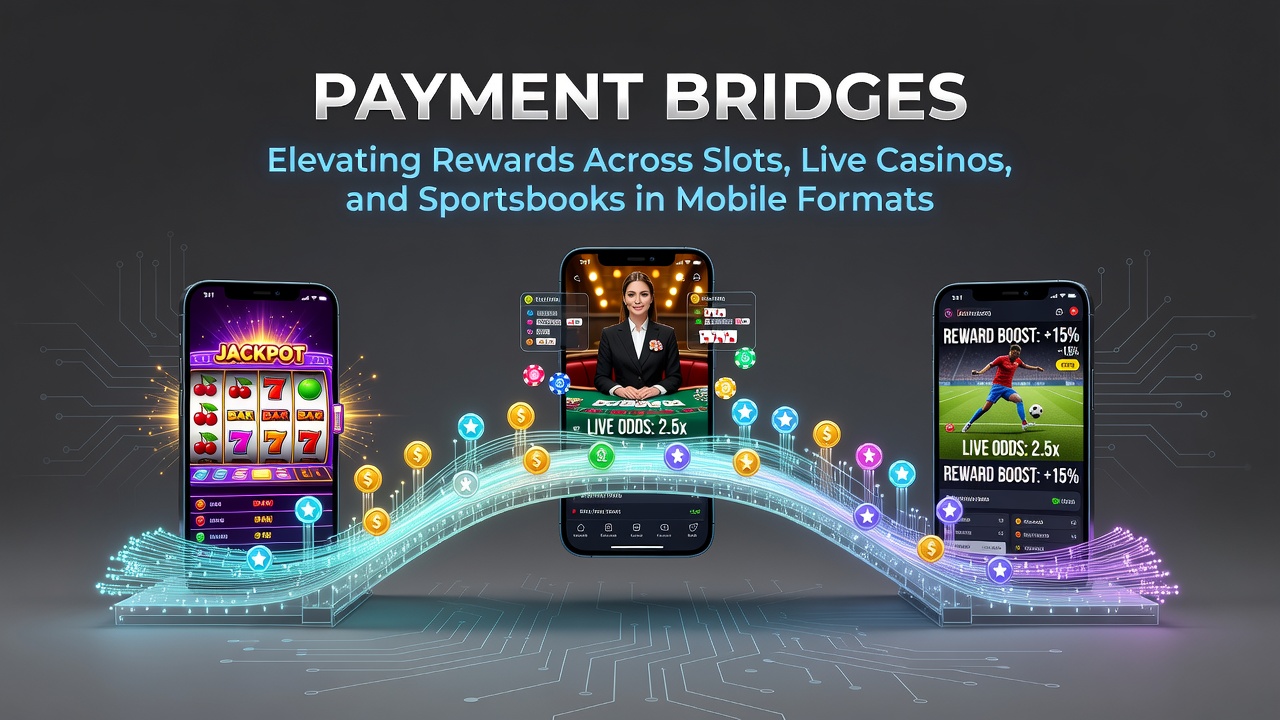
One documented implementation allows a single deposit to fund activity across all three formats simultaneously, with progressive bonuses that scale based on total volume rather than isolated play, and regulatory filings from Canadian provincial gaming authorities confirm such structures comply with existing responsible gaming limits when properly configured. Those who have analyzed transaction logs report fewer abandoned carts when payment bridges handle the routing automatically.
Technical Standards Supporting Mobile Integration
Industry organizations such as the European Gaming and Betting Association have published guidelines that address interoperability between payment gateways and loyalty databases, emphasizing standardized data fields that permit point multipliers to apply uniformly regardless of game category. Mobile developers incorporate these standards into apps that detect device location and adjust available bridge functions accordingly, ensuring compliance wth jurisdictional rules that vary by state or province.
Figures released by the New Jersey Division of Gaming Enforcement show continued expansion of mobile handle in combined formats, with operators citing improved reward velocity as a contributing factor to higher engagement metrics during 2025 and into mid-2026. These statistics align with patterns observed in other regulated markets where unified wallets reduce drop-off rates between vertical switches.
Security and Compliance Considerations
Payment bridges incorporate multi-factor authentication and real-time fraud detection layers that monitor cross-format activity for unusual patterns, while audit trails record every transfer for regulatory review. Research papers from digital security conferences have highlighted successful deployment of tokenization methods that protect sensitive banking details even when points move rapidly between slots, live tables, and sports markets on handheld devices.
Operators report that these safeguards have maintained low dispute rates despite increased transaction volumes, and compliance teams continue to refine monitoring thresholds as mobile usage grows. Data indicates that transparent point valuation across formats helps users understand how activity in one area affects status in others, reducing support inquiries related to balance discrepancies.
Conclusion
Payment bridges continue to reshape how rewards accumulate and transfer across slots, live casinos, and sportsbooks in mobile formats by providing the infrastructure for unified balances and instant conversions. Available data and technical reports demonstrate measurable effects on session continuity and account activity, while regulatory oversight ensures these systems operate within established boundaries. As mobile platforms evolve, further refinements to bridge protocols will likely focus on additional compatibility layers and enhanced tracking capabilities.